Digital Signage Software: Complete 2026 Guide
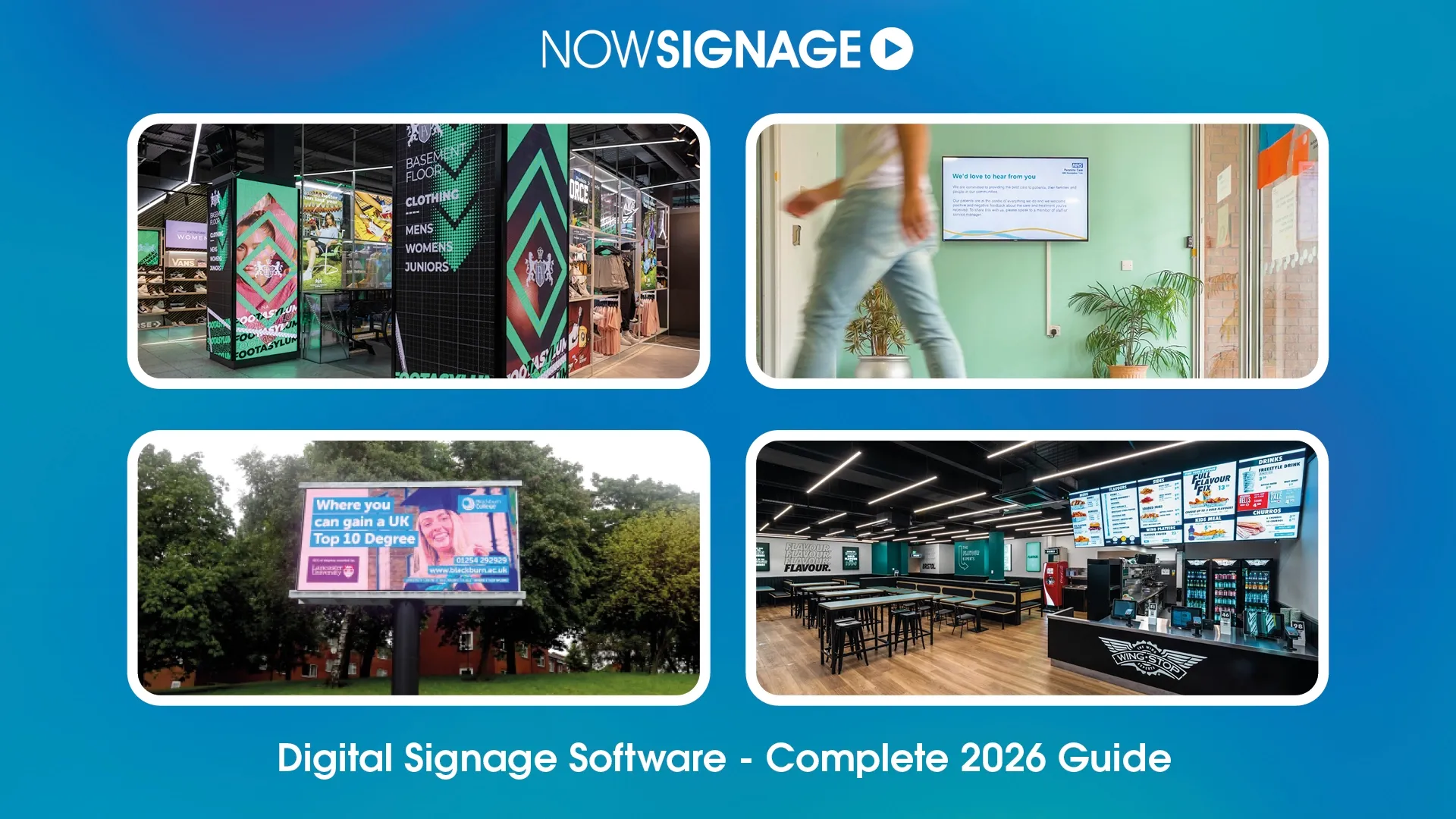
As businesses evolve, digital signage software has become one of the most powerful communication tools available. It connects content, data, and display technology, helping brands manage visual messaging efficiently across multiple locations. In 2026, companies are using digital signage software not just for marketing but also for internal communication, automation, and customer engagement.
What Is Digital Signage Software
Digital signage software is the system that controls what appears on each screen. It allows users to design layouts, schedule content, and publish updates remotely. The software replaces manual processes, making display management fast and reliable. Organisations use it to operate office digital signage, public information displays, and advertising screens with minimal effort.
Key Benefits of Digital Signage Software
Effective digital signage software helps users control large screen networks while improving efficiency and engagement.
Main Advantages
- Simplifies management of display signage across multiple locations
- Supports cloud-based updates for instant content delivery
- Offers advanced scheduling, reporting, and multi-user access
- Compatible with all major devices, including Raspberry Pi digital signage setups
- Enables real-time content updates and automation
- Reduces operational costs while improving message consistency
With the right software, businesses gain flexibility, insight, and complete visibility over every screen.
Applications Across Industries
Digital signage software is used across various sectors, each benefiting in unique ways.
Corporate: Office digital signage keeps employees informed through dashboards, announcements, and KPIs
Healthcare: Hospital digital signage helps patients navigate facilities and access real-time updates
Retail: Enhances promotions and campaign delivery
Education: Displays schedules, achievements, and event updates
Hospitality: Provides menu boards and live promotions for guests
Every industry uses display signage differently, but all benefit from the same centralised control and content automation.
Hardware Compatibility
The flexibility of digital signage software means it supports multiple devices and operating systems. Whether using Android players, SoC displays, or Raspberry Pi digital signage, the system ensures content plays smoothly without manual intervention. Compatibility across hardware gives users full freedom to build a network that fits their goals and budget.
Conclusion
Digital signage software continues to define how organisations communicate in 2026. It offers scalability, creativity, and operational simplicity for every sector. With features like automation, analytics, and device flexibility, it remains the foundation of effective visual communication worldwide.
