Wayfinding Signage: Design Principles and Best Practices
Technology Behind Modern Wayfinding
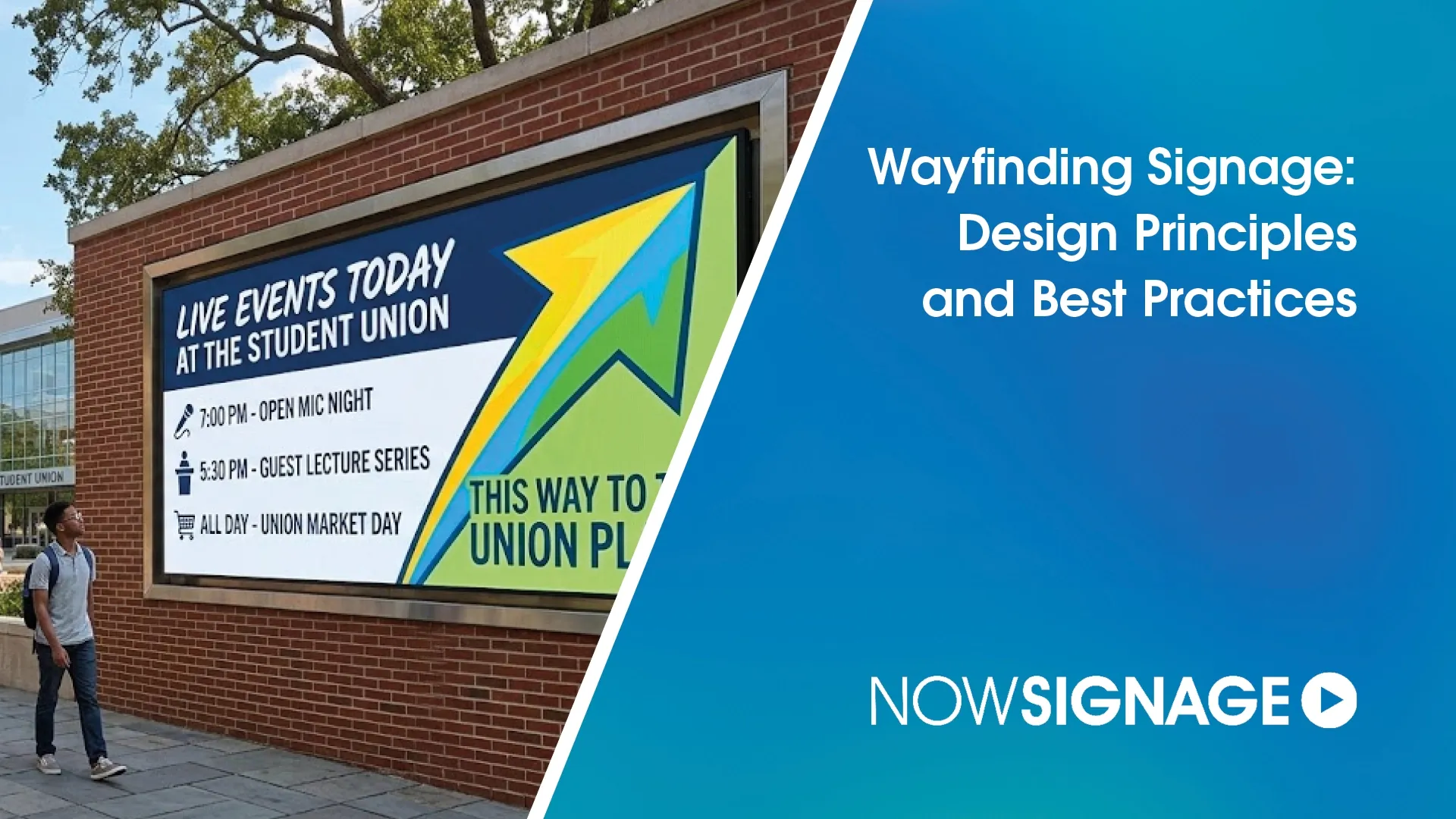
Digital platforms are redefining wayfinding signage with smart content management and interactive systems. Businesses use digital signage solutions to update routes, event information, or emergency alerts instantly. Cloud-based management ensures that content stays synchronised across every display.
Solutions like NowSignage allow integration with mapping APIs, enabling dynamic directional updates and multilingual support. Combined with automation, these systems keep signage consistent and accurate without manual intervention.
Wayfinding Signage Across Sectors
The applications for wayfinding signage extend far beyond public spaces.
- Education: Helps students and visitors navigate large campuses
- Healthcare: Supports patient flow and emergency guidance
- Corporate: Improves visitor experiences and employee movement
- Hospitality: Directs guests to rooms, restaurants, and events
- Transport: Simplifies navigation in airports and stations
Each sector benefits from using a digital signage software solution to maintain flexibility and improve accessibility across facilities.
Best Practices for Implementation
When deploying wayfinding signage, combining design and technology delivers the strongest results.
Recommended Best Practices
- Start with user mapping to understand navigation pain points
- Use consistent symbols and colour coding
- Maintain regular content reviews for accuracy
- Implement a centralised digital signage solution for network control
- Consider scalability to support future growth
With the right planning and platform, organisations can ensure users never feel lost, no matter how large the environment.
Conclusion
Wayfinding signage plays a crucial role in creating intuitive, navigable spaces. By combining thoughtful design principles with powerful digital signage solutions, organisations can transform static environments into responsive ecosystems that guide users with clarity and confidence.