Make every supermarket aisle easier to navigate with digital signage
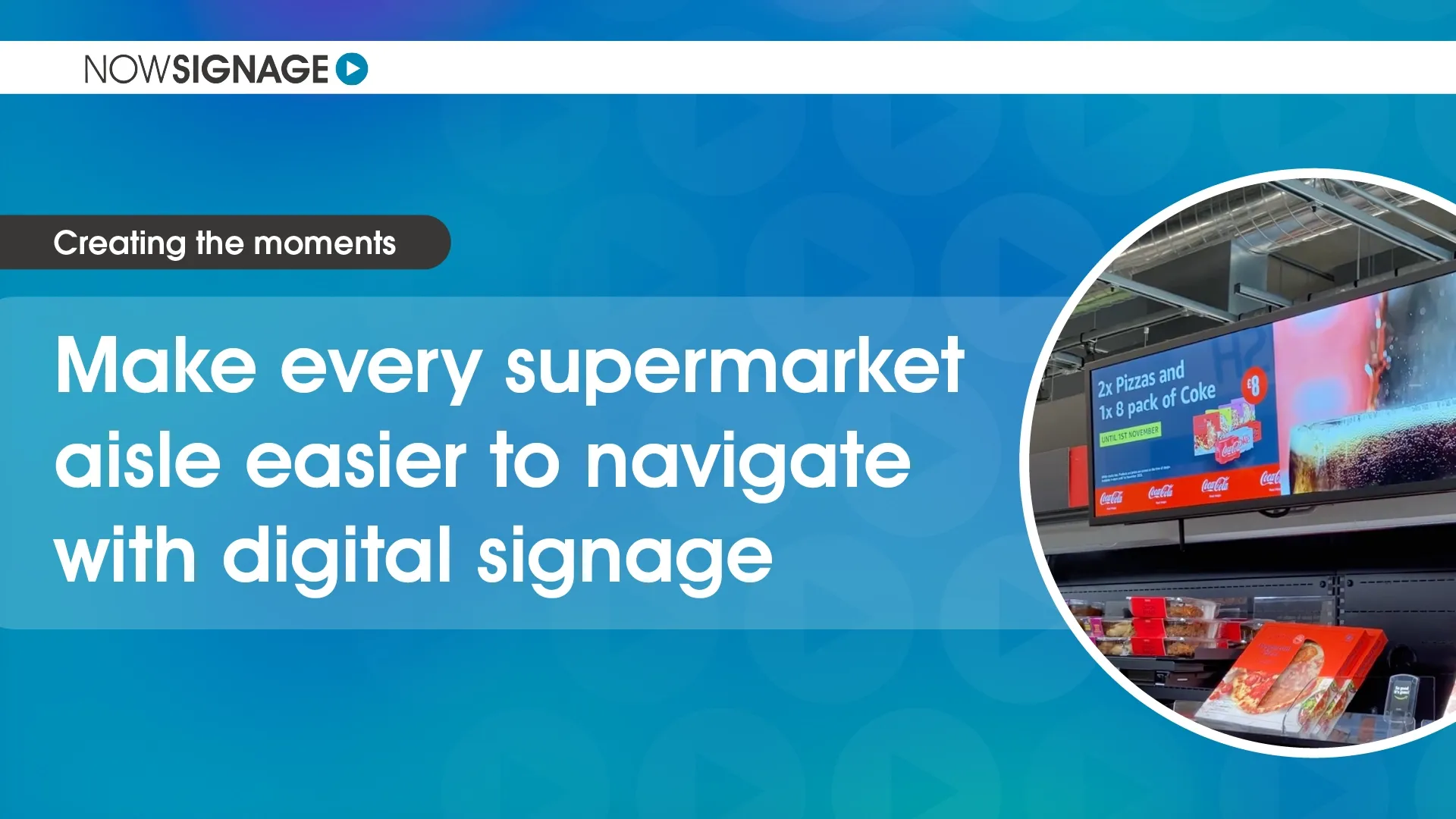
Supermarkets win loyalty by creating a reliable in-store experience: how quickly customers find what they need, how confident they feel about prices and offers, and how smoothly they can get through the checkout.
At its best, digital signage in supermarkets reduces avoidable interruptions in the in-store journey. When product locations, offer details, or next steps are unclear, shoppers spend more time pausing and searching, creating friction and slowing progress through the store.
As well as discouraging customers from making a repeat visit, it also adds pressure to colleagues on the shop floor, especially at peak times. Digital signage can improve the in-store shopping experience by removing friction through clear, timely information.
Five tips for effective supermarket digital signage strategies
So, what can supermarkets do to create a seamless in-store experience? Here are our five top tips:
1. Simplify navigation
Even well-designed supermarkets can feel complex, especially ones with a large footprint. Size is not the only overwhelming factor for customers. Categories move, seasonal bays change, and shoppers often enter remembering an old layout, and with limited time to orient themselves with a new one.
Digital signage display screens can help customers self-navigate by providing clear direction at the points where people naturally pause:
- Entrance screens help customers find key aisles, services, and promotional zones
- Category navigation screens guide shoppers into the right aisle without trial and error
- Localised messages help reflect the reality of that specific store layout, so customers feel understood
2. Make promotions instantly understandable
Promotions are meant to reduce decision effort, but unclear details do the opposite. Multi-buy terms, exclusions, and time windows can be hard to process in a busy aisle, particularly when customers are trying to stay within a budget.
Digital signage improves promotional clarity by enabling centralised updates and consistent presentation, with offer rules designed to be understood in seconds. The best executions focus on:
- Simple, readable phrasing that customers can grasp while walking
- Clear terms that remove ambiguity and reduce misunderstandings at the till
- Accurate timing, so messages appear and disappear when they should
When promotions are clear, customers trust them. When they’re not, staff end up doing the explaining.
3. Support choice in high-comparison categories
When you offer shoppers a broad range of products and services, they often need help choosing the right one for them.
Digital signage can act as a decision-support tool, especially in categories where customers compare quickly, trade up or down, or hesitate because value is unclear. Instead of adding noise, effective content reduces choice effort with cues like: “best for families”, “best value”, “staff picks”, and “popular this week.”
Simple comparisons can help clarify what value customers are getting for the price point. In turn, this reduces the need to stand still and second-guess. For the supermarket, it can help protect margin by supporting value-led decisions.
4. Make meal decisions easier
A significant share of supermarket shopping happens around meal missions. Customers come in with a rough plan, then make last-minute decisions based on time, appetite, who they are cooking for, and what feels easy.
Digital signage can improve this part of the experience by turning decision points into simple prompts. Practical examples include:
- Recipe-led ideas positioned near relevant aisles or fixtures
- “Dinner in three steps” instructions that reduce planning effort
- Complementary suggestions that feel helpful because they are contextually relevant.
5. Keep customers engaged in queues and during checkout
Queues put customers’ patience to the test. What customers want at that moment is clarity: what is happening, what they should do next, and whether the store has control of the situation.
Queue and checkout screens support the experience when they:
- Set expectations with calm, practical messages
- Direct customers to self-checkout or alternative service points where available
- Reinforce simple add-ons that match supermarket missions, without distracting from getting through the till
For store teams, the benefit is fewer repeated questions and less friction at the final stage of the visit.
6. Timing is key
A message that appears at the wrong moment can simply become background noise, which is why timing is key for effectively implementing each of our five recommendations.
Most supermarkets start with controlled, repeatable variation, for example, switching content by time of day so messages match different shopping patterns. With the right approach, central teams can keep content accurate and consistent, without relying on store-by-store changeovers.
How NowSignage can help
NowSignage exists to help supermarkets make every in-store moment count. With our digital signage solutions, central teams can update and schedule content across multi-site estates, keeping promotions, pricing and store messaging accurate and consistent. Our solutions also help supermarkets respond quickly to what’s happening in-store, from queue pressure to shifting shopping patterns, so screens support a strong customer experience and keep footfall flowing.
Get in touch to find out more.
Download our latest guide: 10 in-store moments that drive revenue
